OTP verification, explained
OTP stands for one-time password — a short code that's valid once, for a few minutes. OTP verification is simply the act of sending one and checking it back. It's the most common way to prove a person is present and controls a channel, which is almost always their phone.
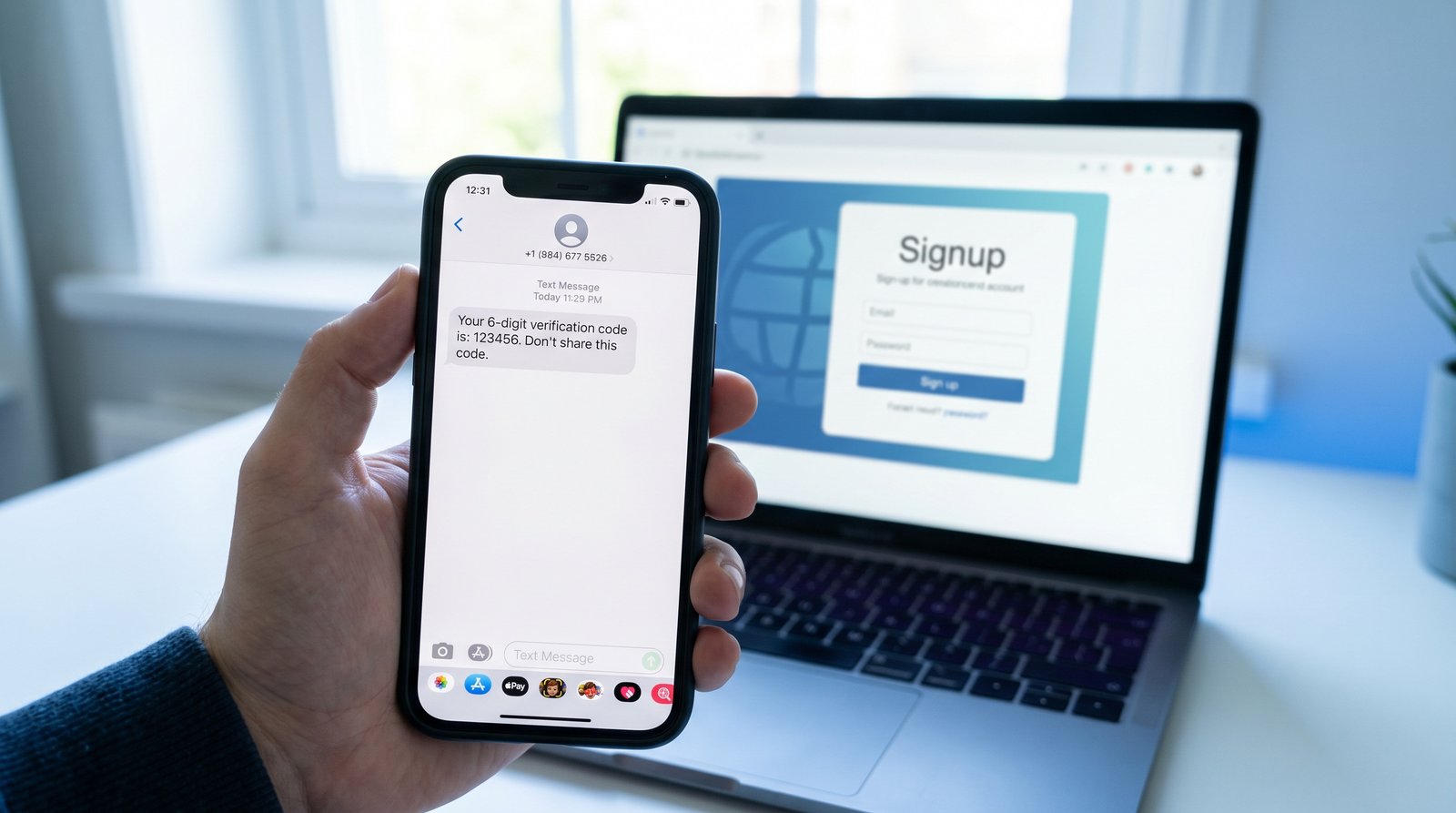
SMS OTP vs authenticator (TOTP)
Two flavors dominate. SMS OTP texts (or iMessages) the code to a phone — zero setup, works for everyone. TOTP generates the code inside an authenticator app like Google Authenticator — more secure, but the user has to set it up first. For signups and consumer logins, SMS/iMessage OTP wins on reach; for high-value admin accounts, TOTP or passkeys are stronger.
What makes an OTP secure
Four things, and iBlueText does all four: a short expiry (a few minutes), single use, a hashed copy stored server-side (never the plain code), and rate-limited attempts so nobody can brute-force six digits.
Delivery is half the battle
A perfect OTP that never arrives is useless. iBlueText sends to iPhones over iMessage (instant, autofill-ready, no carrier filtering) and to Android over SMS — automatically, worldwide.
curl https://ibluetext.com/api/v1/verify \
  -H "Authorization: Bearer $IBT_KEY" -d '{"phone":"+18135550142"}'
# then check:
curl "https://ibluetext.com/api/v1/verify?action=check" \
  -H "Authorization: Bearer $IBT_KEY" -d '{"id":5512,"code":"481920"}'
Get a free API key → Read the docs
Related
Frequently asked questions
What does OTP mean?
One-Time Password — a short code valid for a single use and a few minutes, used to verify a person controls a phone or account.
Is SMS OTP safe?
It stops the vast majority of bots and fake signups. For high-value accounts, pair it with a password or use an authenticator app — SMS is one factor.
How long should an OTP be valid?
A few minutes is standard. iBlueText expires codes quickly and allows only a limited number of attempts.